The concepts of “doing things better” and “doing better things” applied to some of the following Ed-Tech implementation ideas comes from Kirkwood and Price’s 2016 Technology-Enabled Learning Implementation Handbook (Kirkwood, A., & Price, L. (2016). Technology-Enabled Learning Implementation Handbook. Vancouver: Commonwealth of Learning.).
In short, technologies that impact student learning by “doing things better” supplement existing teaching strategies (usually accessibility-related), but do not change the nature of learning that they support, while technologies that “do better things” provide learning opportunities that were not previously available and focus on developing qualitative changes in students’ learning.
Doing things better: Teaching ChatGPT for writing the first Microbiology lab report
While the professor that oversees the lab I teach does not allow the use of AI for any assignments for this course, I believe teaching students how to utilize an AI chatbot correctly to help them improve their writing would be highly beneficial for multiple reasons. The goal of this first technology implementation idea is to improve four things:
- Students’ understanding and retention of the lab content
- Students’ AI literacy skills
- Student’s writing confidence and skills
- Overall lab report grades
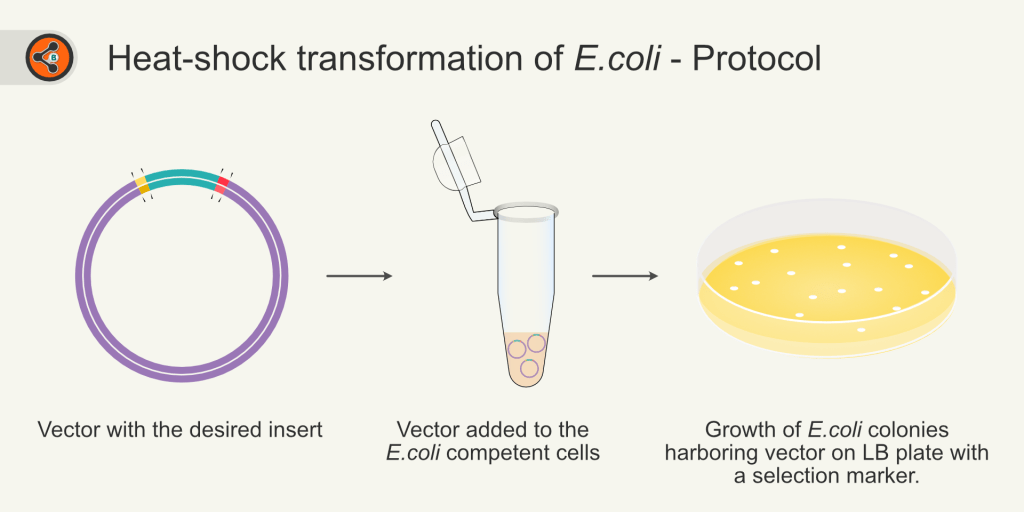
The first lab report involves bacterial transformation of E. coli with a circular piece of DNA called a plasmid.
The students struggle with two main aspects of the report: properly explaining scientific content without plagiarizing and writing with correct grammar. I would like to give a presentation to my students on how to properly use an LLM like ChatGPT to offer revisions for their scientific writing.
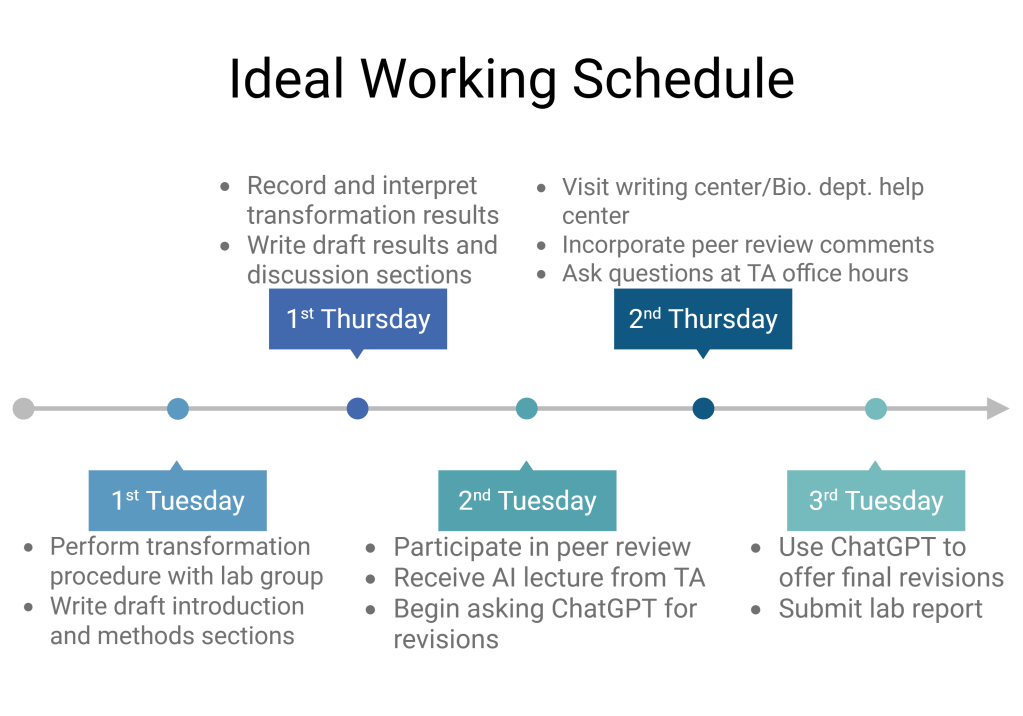
If this were a study, I would have students write their lab reports without the use of AI and submit them on the normal due date; after, I would give them a short lecture on proper use of LLMs for revising written work, primarily its advantages and disadvantages and the importance of carefully checking the output. I would grade and provide comments for both versions, assessing both their pre-chatbot capabilities and post-AI revisions. I could directly compare the grades to gauge how effective using an LLM was at improving content comprehension and grammar.
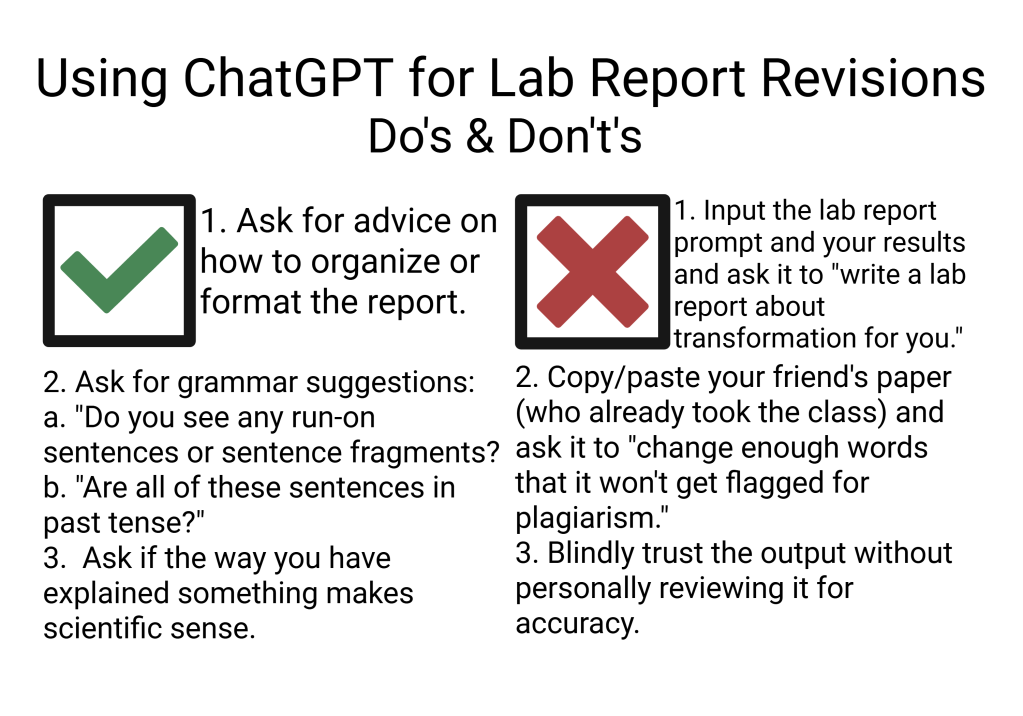
If I could integrate this crash-course on AI literacy in microbiology lab, I would give my lecture after the experiment concluded and they had already completed and submitted a first draft for peer review. There are a total of five lab periods between the start of the experiment and the submission date for their lab report. With both approaches, I could require a reflection from the students on how using an AI chatbot improved their confidence in writing a scientific paper, and how they felt about the feedback they received on both versions of their papers.
Doing better things: Applying virtual reality labs to Microbiology lab.
I want to incorporate virtual lab experiences into microbiology lab to help strengthen students’ confidence, speed, and accuracy in microbiology labs. By requiring that every student complete a simple virtual version of the lab for that week, they will feel more capable of themselves when it comes to performing the procedure in person.
To test how virtual reality labs affect students’ abilities in the lab environment, I could compare two groups of students: one that had already done the lab in a virtual reality setting and read the background and protocols in their lab books, and one that could only read their books. I would give the same lecture before lab to both groups, and then each student would be required to work independently (without discussing or seeing other group members work). I could record the time it took for each student to complete the lab and the accuracy of their results and worksheet. This study could account for each students’ grades in biology lab courses prior to account for any differences in natural ability between students. In a less quantitative approach, I could simply ask students for reflections on how they felt before and after completing the procedure, and whether or not they found the virtual lab experience valuable.
Future accessibility: I would make sure every student had a computer available to complete the virtual lab; if possible, I would have them complete it directly before lab either on their own computers or at the computer lab. I have found a couple options already (free and paid); the free version from Michigan State University does not follow our lab protocols exactly (they use a flame for aseptic technique, while we use an incinerator) and when I tried to do it myself, the controls/responses did not work as I thought they should.
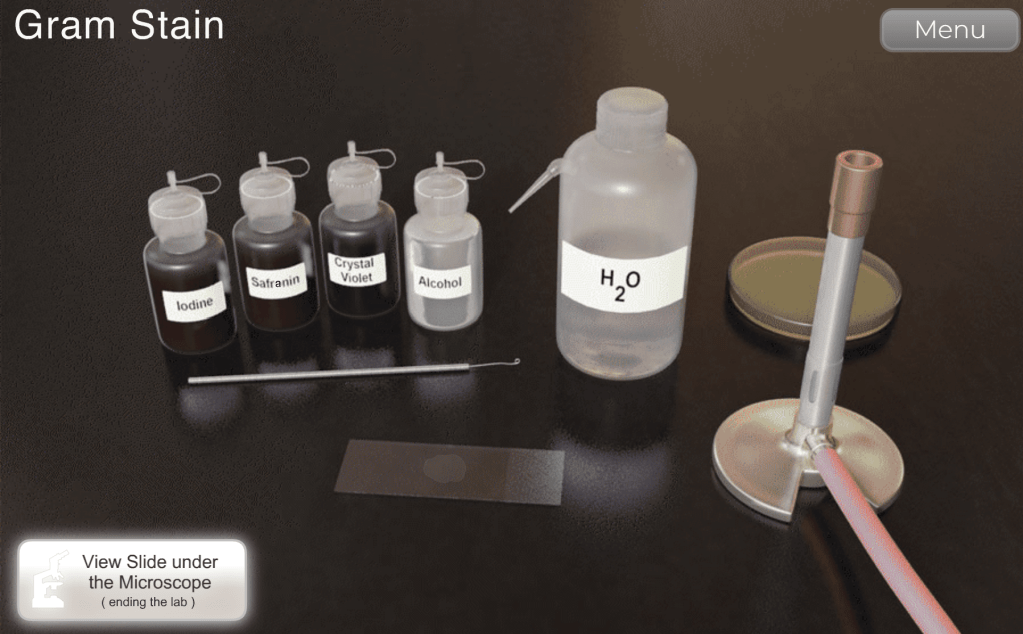
https://learn.chm.msu.edu/vibl/content/gramstain.html
I am not sure how a paid version would appear or whether an instructor could work with software teams to develop something linked to an in-person lab at a university; one company I found was PraxiLabs (https://praxilabs.com/en/blog/category/virtual-labs/). The goal would be to integrate virtual reality into the budget of the course so it does not get put on the students; however, it is also likely that incorporating virtual labs would cause the lab fee to increase.
Doing things better: Using Kahoot polling to both assess understanding in Microbiology lab and add a gamification element.
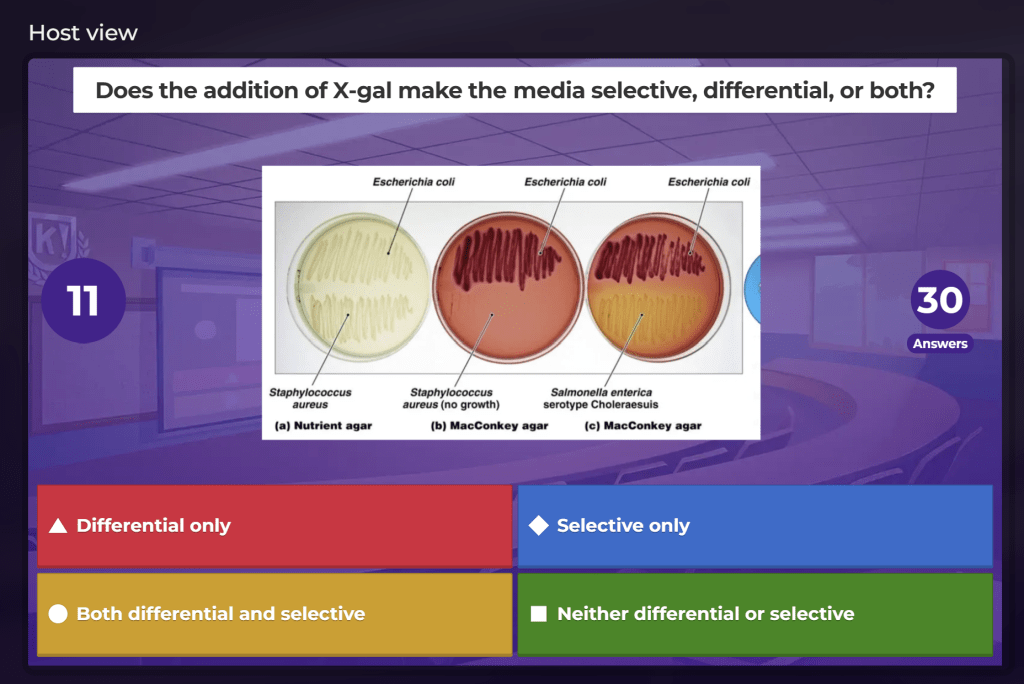
Kahoot online quizzes provide great information to both students and teachers about the state of understanding among the group on a certain topic, while also being fun and engaging. I would like to give a quiz relevant to the lab content once a week. Since we are not allowed to have electronics out during lab due to them possibly getting contaminated, I would need to take time at the beginning of lab before we put on our lab coats and gloves to play Kahoot. Doing these at the end of lab would not be as feasible because the students finish their work at varying speeds. The goal would be to assess how students are understanding the lab content and potentially connect to their future careers. Not only does this format make students’ comprehension visible to themselves, but it allows me as the teacher to tailor my explanations to cover gaps revealed by the game.
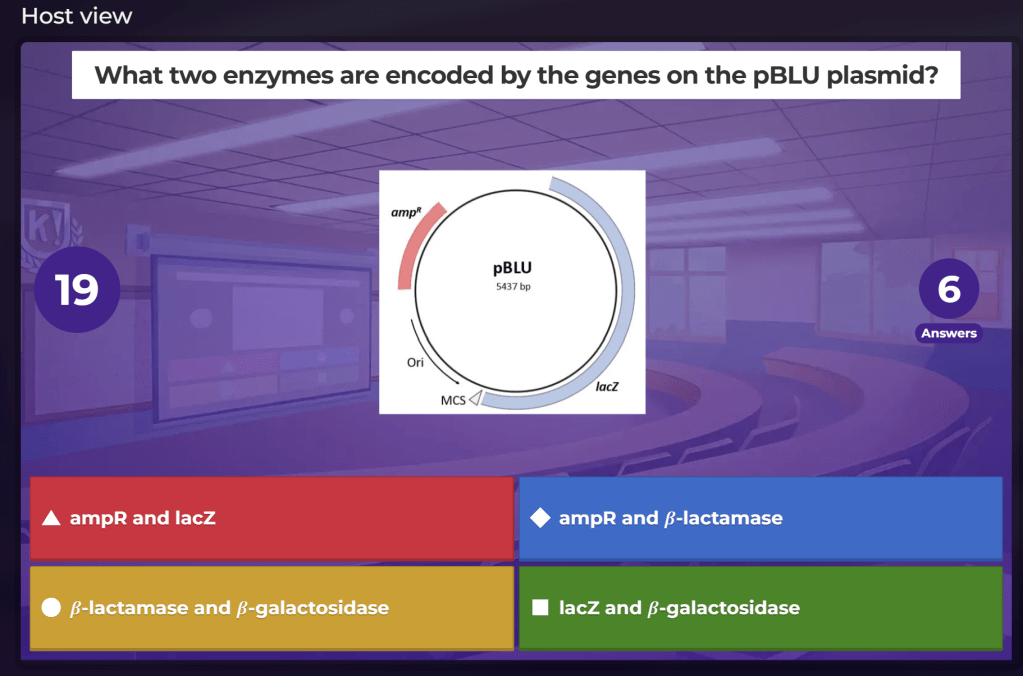
One of the most consistent misunderstandings I see regarding the first lab report is the connection between the plasmid DNA, the genes contained within that plasmid, the enzymes those genes encode, and the activities those enzymes do (or the traits they confer with successfully transformed cells). I also see confusion with the concepts of positive controls, negative controls, and experimental groups because, up until this point in their academic careers, they have only had to differentiate between control and experimental treatment groups. I have tailored my questions to try and get at these two misunderstandings, plus a few other important concepts. There is a mixture of the normal Kahoot multiple choice (4 choices) and true-false questions, but ideally I would like to pay for the upgrade once I am teaching professionally to ask a wider variety of questions that may require them to type answers or put concepts in a certain order.
Here is a Kahoot game for UNR’s BIOL251 Microbiology course, lab 13 (Bacterial Transformation). Not only does this quiz test their knowledge and add a playful, competitive element to a complex topic, but it directly informs them of the knowledge they are lacking when it comes to writing their lab reports.
https://create.kahoot.it/details/f0709803-b1e3-4d49-a1d7-7daef838ce37
Doing better things: Integrating Project-Based Learning (PBL) in Microbiology lab
The goals of implementing PBL in the lab setting would be to increase students’ engagement in the course through self-guided exploration of topics of interest, build students’ communication and technology skills through the creation of a digital presentation with peers, and add a third element of learning to the classic STEM lecture-lab course pairing.
Project Timeline
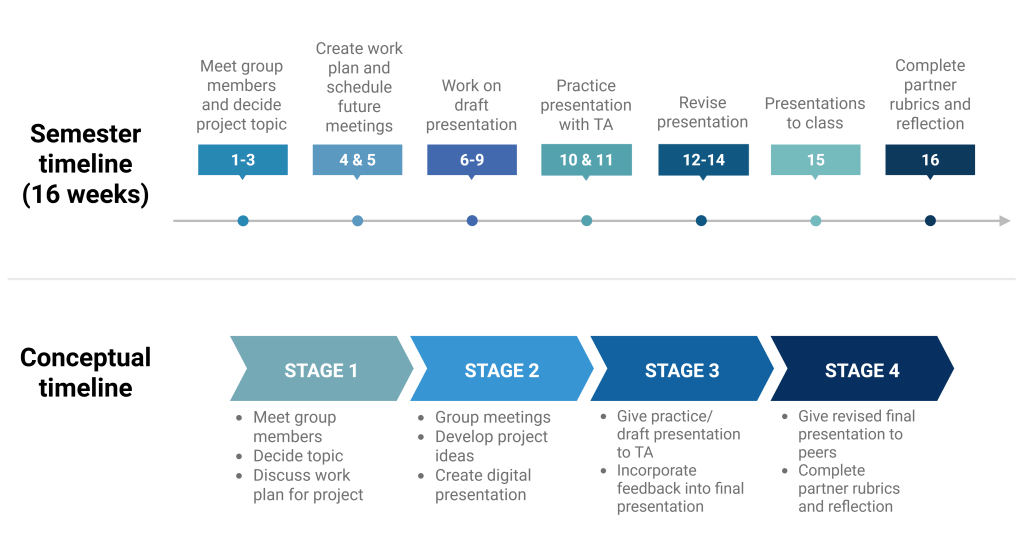
Project Description for Students
Choose a project idea amongst your table and do a deep-dive on this topic. Create a digital project (presentation, video, etc.) and present it to your peers.
Some ideas:
- What is a common bacterial or viral infection that has affected yourself, someone in your life, or that you might see in your future career? Research its history, pathology, and its past, current, and future treatments.
- In what ways has the field of microbiology historically not been accessible to all types and groups of people? Where has racism or sexism reared itself in this field? Do you think these problems have been solved, or are they still present?
- Why is there rising concern amongst some members of the global community regarding the safety of vaccines? What is a vaccine, and why are people fearful of them? How do you feel about vaccines?
- How are microbes important in fields not-related to human health? Explore how microbes mediate processes important to fields like ecology, environmental science, and geology?
- How do microbes mediate interactions between organisms and their environments? Interactions with other organisms?
- How do microbes contribute to geologic processes?
- Why has the gut microbiome been such a hot topic lately? Why are microbes important to nutrition across taxa? How can someone be treated for a “bad” gut microbiome?
- Pick one huge discovery in the field of microbiology and do a deep dive:
- How was this discovery made, and who made it? Why was it so important? What tools did they use to find what they found?
- How has this discovery led to other important findings in microbiology and/or other fields?
Other ideas would be welcome, but must be approved by the Lab TA beforehand.
Post-presentation reflections
The reflection process would not only involve assessing their peers’ contributions via rubric, but they would judge their own efforts, as well. There would also be a written reflection process where students individually analyze how the project developed over the semester, including the revision process and the final result, and how this project affected their learning and engagement during the course. Some guiding questions would include:
1. How was your group’s project topic relevant to your intended future career?
2. Why were you passionate about your group’s project topic, even if it was not your idea? Did your excitement or interest in the topic change over the course of the project?
3. What other ideas (microbiological or otherwise) did this project get you thinking about?

