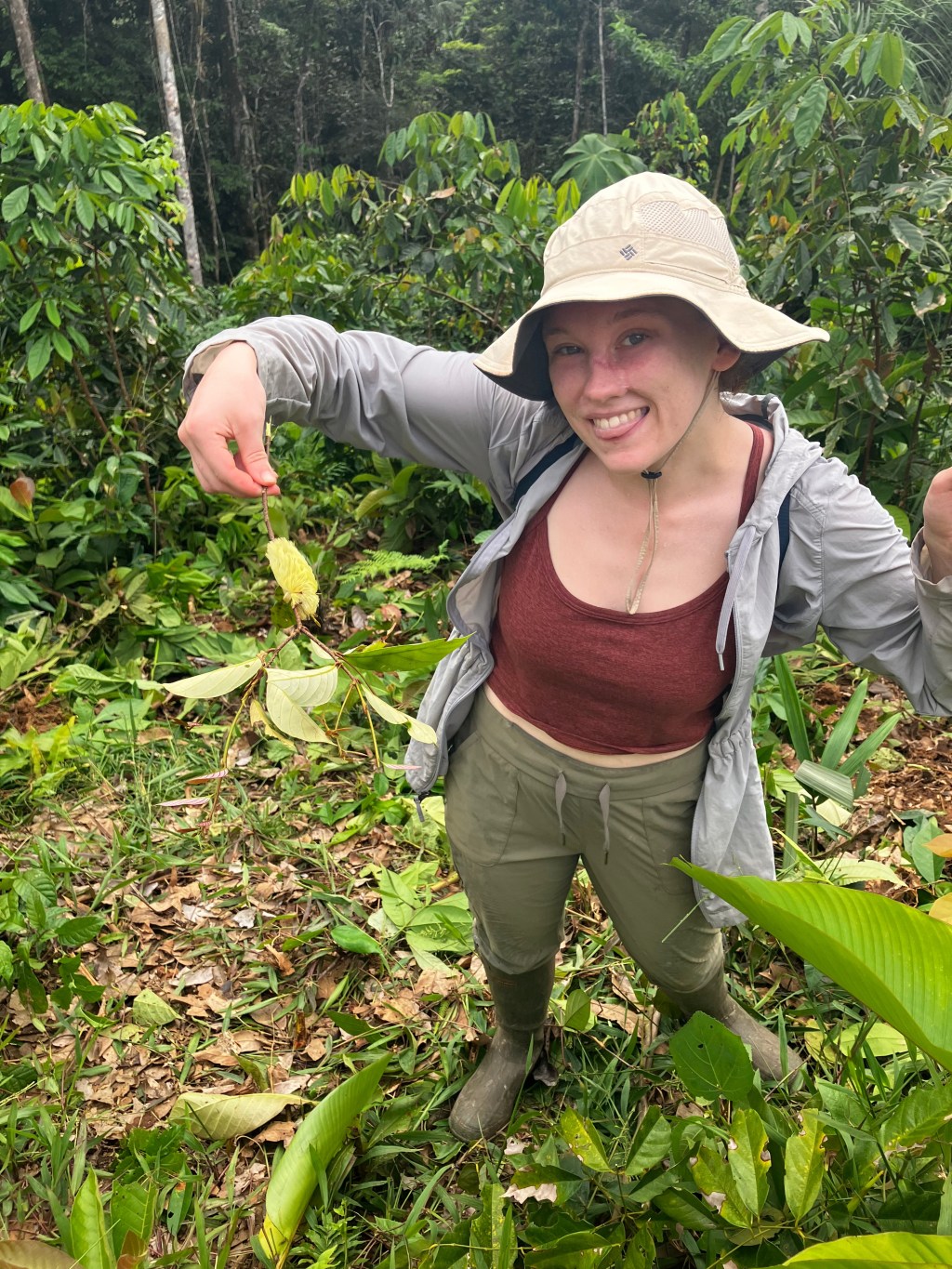
My name is Abigail Jarrett, but you can call me Abby.
I am a PhD candidate at the University of Nevada, Reno, in the Ecology, Evolution, and Conservation Biology Program (EECB). My advisors are Drs. Lora Richards and Lee Dyer in UNR’s Biology Department, and I have been a teaching assistant for Microbiology lab (BIOL 251) every Fall and Spring semester since I started graduate school in August 2022.
I am originally from Central Pennsylvania and moved to Reno to pursue a graduate degree studying plants, with the larger goal of becoming a researcher at a university or botanic garden after completing my PhD and post-doctoral studies. I love teaching higher education STEM courses and am passionate about connecting complex scientific topics with everyday life.
My education & research history:
I graduated from the University of Pittsburgh in 2019 with a B.S. in Biology and a B.A. in English writing. I was awarded a Fulbright Study/Research scholarship in 2019 to research the ecophysiology of marine bivalves at Universität Rostock in Northeastern Germany. I lived there beyond my scholarship with funding from my lab, and returned to the US during the height of the COVID-19 pandemic in December, 2020. After waiting a bit for things to get back to normal, I applied for PhD programs and moved to Reno in 2022.
I have studied a weird variety of things, from jumping spiders, to oysters and clams, strawberry-microbe-insect interactions, and even a stream-nesting bird. My current research focuses on comparing Traditional Indigenous Knowledge, and the practices that stem from it, with ecological theory based on the scientific method. One of my projects is a common-garden experiment in the Ecuadorian Amazon assessing how small-scale Indigenous fire practices affect how ecosystems function, mainly by looking at plant chemical diversity and subsequent insect herbivore interaction diversity. I have also been the recipient of three Foreign Language Area Studies (FLAS) from my alma mater to study the most widely spoken Indigenous language in Ecuador, Kichwa. Ecuadorian Kichwa is in the same language family as Quechua, the language of the former Incan/Inkan society of Western South America.
I love to volunteer in my community.
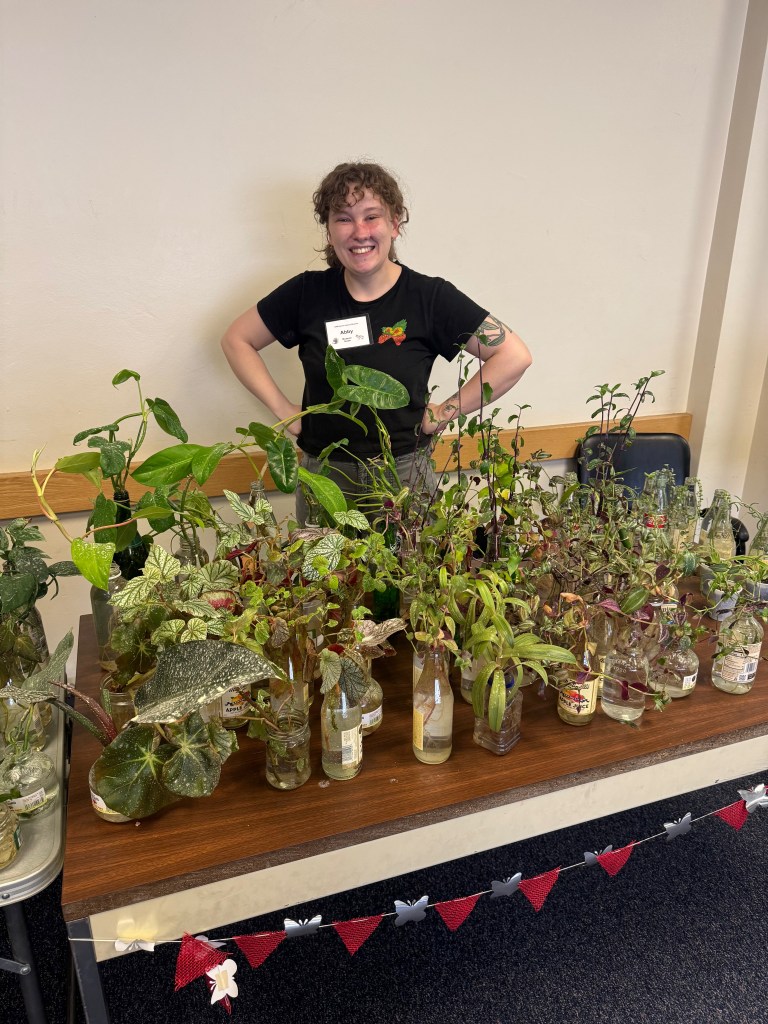
I volunteer with UNR’s Museum of Natural History throughout the year when they host events for the public. Once a year I collect houseplant cuttings from Reno/Sparks community members and small business owners to give away to children visiting the museum for a science/nature craft event. When I am not handing out pieces of plants, I usually pull out the Central/South American moth and butterfly collection to show off the wonderful diversity of sizes, shapes, and colors present across tropical species.
I have been a part of Washoe County’s Master Gardener program since the beginning of 2024; I took the home horticulture course in Fall 2023, finished my internship year in 2024, and am currently serving my second year as a certified Master Gardener. I love educating my community on gardening and empowering people to grow plants, edible or ornamental.
More information about the Washoe County Master Gardener program can be found here:
https://extension.unr.edu/master-gardeners/washoe.aspx
I am extremely passionate about plants!
My big dream right now is to become an botanist/ethnobotanist at an institution in the USA, ideally at the Missouri Botanical Garden in St. Louis.

